There's a quiet crisis happening inside AI native companies right now.
The product works. The demos land. The founders are sharp. But somewhere between "this is impressive" and "we're renewing the contract," something breaks. Customers churn. Expansions stall. Sales cycles stretch. And when you dig into the why, it almost never comes down to technology.
It comes down to value, or more precisely, the inability to show it.
The problem nobody is talking about loudly enough
Ask any founder building in the AI agent space what their hardest sales conversation is right now, and they'll almost all say the same thing: proving the value of what the agent is actually doing.
Not in the pitch. The pitch is easy. Show a workflow, run a demo, show the time saved. Buyers get it in the room.
The problem is everything after the room.
Once an agent is deployed and running in the background, it becomes invisible. It's not a dashboard your team logs into every morning. It's not a tool your SDRs open and close fifty times a day. It's a process: automated, silent, and largely out of sight. And humans are not wired to assign value to things they can't see.
This is the fundamental buyer psychology problem that the AI agent industry has not yet solved.
When a company bought Salesforce, they could see their reps using it. When they bought Slack, they could watch the channels fill up. Adoption was the proof of value. Usage metrics were the story you told at renewal. "We've got 200 seats active, everyone's in it every day." That was the business case.
Agents break that model entirely.
Your agent might be running thousands of tasks a week. It might be compressing hours of work into seconds. But if your customer can't see it working, can't feel it in their day-to-day, the value doesn't land. And when renewal comes around, you're not replaying success. You're re-selling the original promise.
That's an extraordinarily difficult position to be in.
Why this breaks the entire customer lifecycle
The value gap doesn't just affect renewals. It infects every conversation across the entire customer lifecycle.
At the sale: You can show capability, but you can't show proof. The buyer has to take a leap of faith.
During onboarding: The agent starts running, but there's no shared framework for what success looks like. The customer doesn't know what to measure. You don't know what to report.
At QBRs: You're presenting activity metrics (tasks run, actions taken) but you can't translate those into the business outcomes the customer actually cares about.
At expansion: You want to charge more because the agent is doing more. But without a value anchor, "doing more" is an abstract claim, not a compelling commercial argument.
At renewal: You've been running for twelve months, and you still can't answer the question every CFO is going to ask: "What did we actually get for this?"
This isn't a product problem. It's a commercial infrastructure problem. And it's costing AI agent companies real revenue.
The root cause: No agreed value framework
The reason companies can't demonstrate value is that they never defined value in the first place, at least not in a way that's commercially replicable and grounded in the customer's own reality.
Most AI agent companies measure the wrong things: uptime, task completion rate, error logs. These are engineering metrics. They tell you if the agent is working. They don't tell you what the agent is worth.
To demonstrate value, you need three things:
- The customer's own benchmarks: what did this task cost in time or money before automation?
- A shared unit of value: an agreed measure that both sides accept as meaningful
- Real-time tracking: the ability to show that measure accumulating over time
Without all three, you're guessing. And guessing doesn't close deals, retain customers, or justify price increases.
How to fix it: Building a value-first sales motion
Step 1: Define value before you deploy
The most important conversation you can have with a new customer isn't about implementation. It's about value definition.
Before the agent goes live, sit down and ask the customer to map the work the agent will be replacing or augmenting. Be specific. If the agent drafts outbound emails, ask: How long does it currently take an SDR to draft one email? What's the fully-loaded cost of that time? If it processes invoices, ask: How many hours a week does your AP team spend on this today?
Get numbers. Write them down. Make them part of the contract or onboarding documentation. These are not just discovery questions. They are the value baseline you will return to for every commercial conversation you have with this customer for the life of the relationship.
Step 2: Agree on the value metrics that matter to them
Different customers care about different things. A scaling startup cares about velocity: how fast can the agent help them do more with fewer hires? An enterprise procurement team cares about cost reduction and risk mitigation. A revenue team cares about pipeline impact.
Your job is not to impose a value framework. Your job is to elicit theirs.
Ask: What would make this a clear win for you in twelve months? How would you describe the ROI of this to your CFO?
Whatever they say, that's your value metric. Not your interpretation of it. Not a proxy. Their words, their numbers, their frame.
Step 3: Build value into every touchpoint
With the baseline and metrics agreed, every customer interaction becomes an opportunity to replay value rather than re-sell it.
Weekly summaries, QBR decks, Slack updates, all of them should be anchored to the agreed value metrics. Not "the agent ran 4,200 tasks this month." Instead: "This month, your agent drafted 1,000 outbound emails. At your benchmark of 5 minutes per email, that's 5,000 minutes (roughly 83 hours) returned to your SDR team. At your blended SDR cost, that's £X in recaptured capacity."
Their numbers. Played back to them. In value they already said was meaningful.
This is what moves renewal from a negotiation to a formality. When a customer has been watching their own value metrics accumulate in real time for twelve months, the CFO question answers itself.
Step 4: Anchor your pricing to the value you've proven
One of the biggest mistakes AI agent companies make is pricing against arbitrary benchmarks (market rates, competitor pricing, cost-plus models) rather than the value they've actually demonstrated.
If you've been tracking value diligently, you have a far more powerful anchor: the customer's own ROI data.
If your agent has delivered £200,000 in recaptured capacity over twelve months, you are not renewing a £20,000 contract. You are renewing a contract that delivers a 10x return. The commercial conversation is completely different. You have the right to charge more, and you have the evidence to justify it.
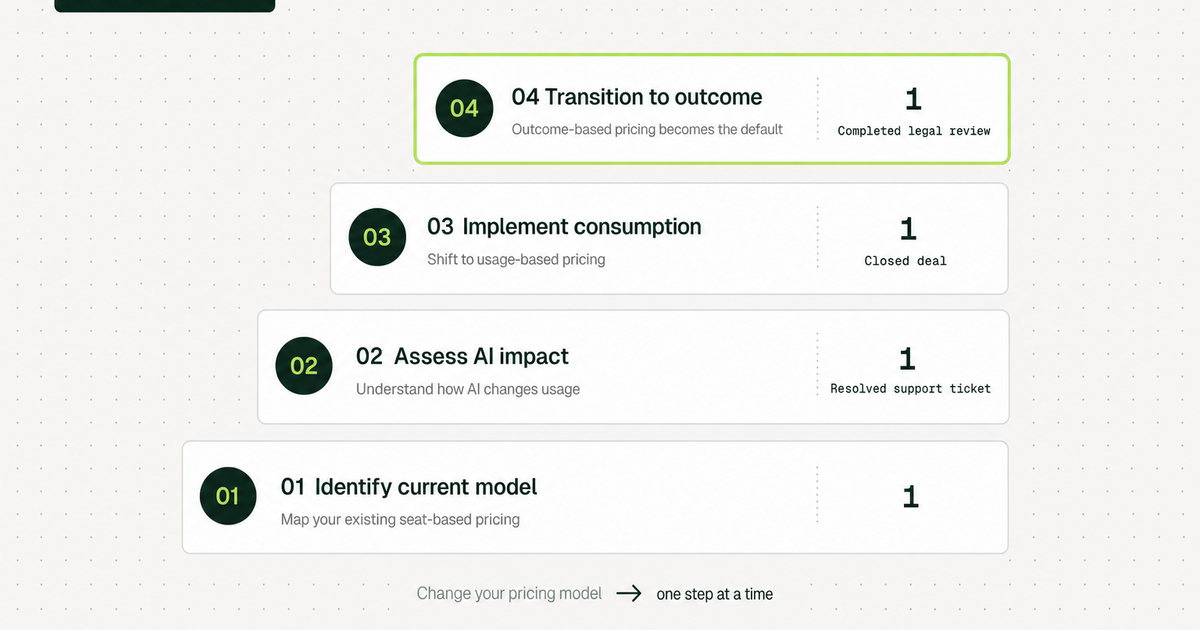
This is how usage-based and outcome-based pricing models should work in practice. Not as a billing mechanism, but as a value-anchored commercial strategy.
The visibility problem is a human problem
It's worth dwelling on the psychology here for a moment, because it explains why value communication in agentic AI requires more effort than it did in traditional SaaS, not less.
When you buy a tool that people sit in front of every day, the value is felt viscerally. Your team is in it. It's part of the workday texture. You don't need to be convinced it's working; you experience it working.
Agents operate in the background. They don't occupy screen time or mental real estate. They just... work. Silently. Which means the value they create is cognitively invisible to the humans who are supposed to be paying for it.
This is not a flaw in the technology. It is an inherent property of automation. The more seamlessly an agent does its job, the less visible it becomes, and the harder it is to justify its cost to someone who hasn't been shown the numbers.
The companies that win in the AI agent space will be the ones that solve this visibility problem commercially. Not by making agents more visible, but by making their value impossible to ignore.
How Paid solves this
This is exactly the problem Paid is built to address.
Paid allows AI agent companies to attach a custom value to every action their agent takes, calibrated to the metrics the customer themselves has defined. Not generic estimates. Not industry benchmarks. The actual numbers your customer gave you during discovery.
When your agent drafts an email, Paid can record that action against the customer's agreed value: 5 minutes of SDR time, at their stated blended cost per hour. When the agent processes an invoice, it logs against the finance team's baseline. When it qualifies a lead, it records against the value the customer told you they attribute to qualification speed.
Over time, this creates a live, accumulating value ledger: in real terms, in the customer's own language, using the numbers they provided.
The result is that every commercial conversation (QBRs, expansions, renewals) is anchored not to what you think you're worth, but to what the customer has told you they're getting. You're not asserting value. You're replaying it.
And because the value metrics are agreed upfront and tracked continuously, your pricing has a foundation it's never had before. You can anchor contract value to demonstrated ROI rather than arbitrary market rates. You can justify price increases with evidence rather than negotiation. You can enter every renewal conversation from a position of proof.
That's not just a better sales motion. It's a fundamentally more defensible business.
The bottom line
The AI agent industry is generating extraordinary technology. What it hasn't yet built is the commercial infrastructure to match.
Demonstrating value is not a nice-to-have for AI agent companies. It is the single most important capability in your go-to-market stack. Without it, you are re-selling every customer, every quarter, on a promise rather than proof.
Define value before you deploy. Agree the metrics that matter to the customer. Track it in real time. And anchor every commercial conversation to the numbers they gave you, played back in value they can see.
That's how you stop losing deals you should be winning.
Paid builds financial infrastructure for the AI agent economy, including the tooling to track, report, and monetise the value your agents deliver. Learn more →
Stay ahead of AI pricing trends
Get weekly insights on AI monetization, cost optimization, and billing strategies.
Monetize AI Without the Headache
The billing platform built for AI companies. Launch pricing models, track costs, and optimize margins—no engineering lift.
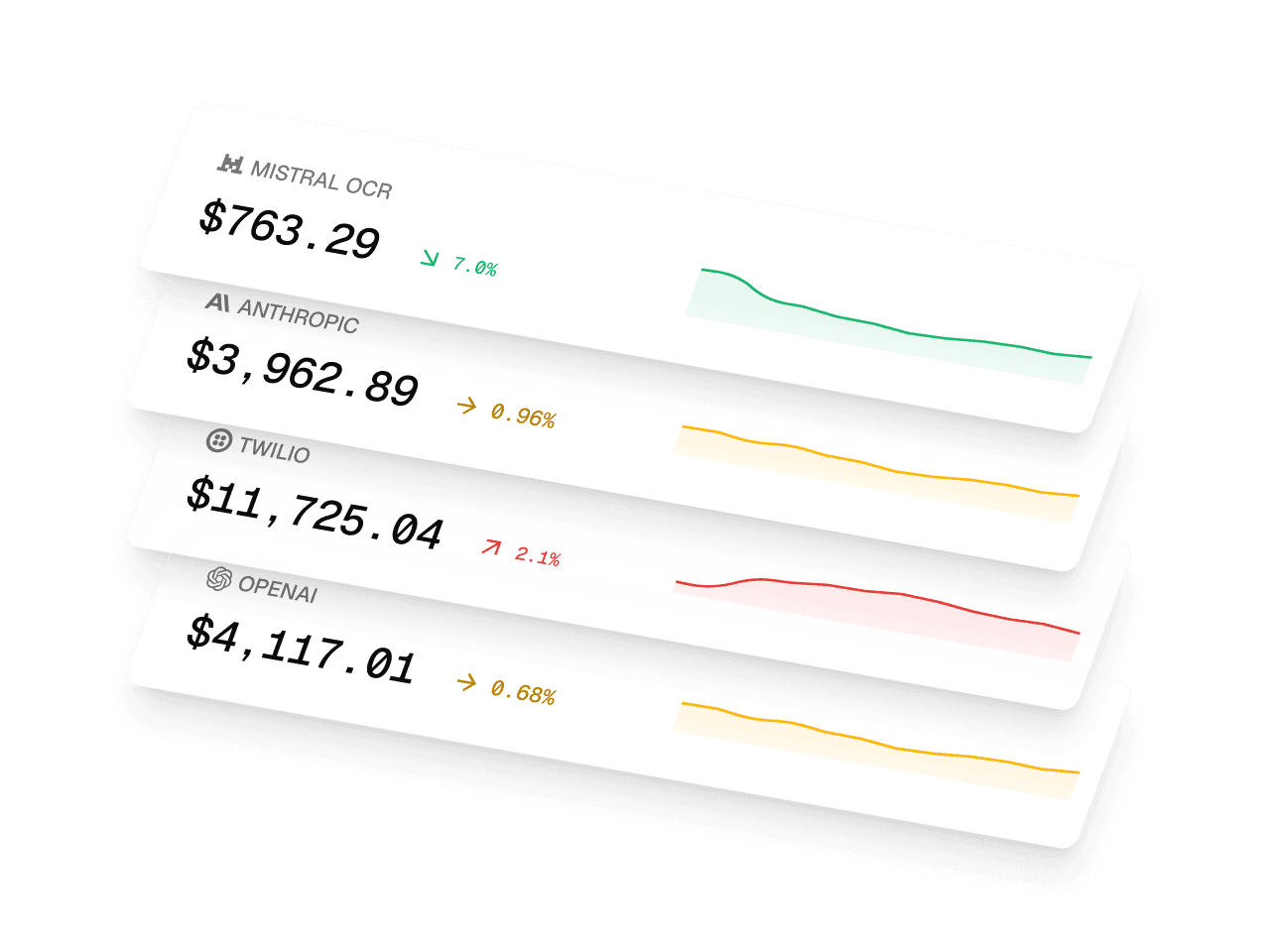
- Track AI costs by model & customer
- Launch usage-based pricing fast
- Know your margin on every deal
- Integrate in minutes