There is a line from a recent conversation on the Get Paid podcast that has stuck with us. Nick Mehta, who spent 13 years building Gainsight into a billion-dollar company, was describing how investors currently think about legacy SaaS businesses. He said: 'imagine you open a Halloween store in September. You know it is over on October 31. So you extract maximum value in the window you have, spend as little as possible, and get out.'
That is how the market is pricing a lot of seat-based SaaS right now.
Not because those businesses are bad. Not because the teams running them are not talented. But because the window is closing, and everyone in the room knows it.
At Paid, we build the billing and monetisation infrastructure that sits underneath agentic software companies. We watch pricing models up close every day. And what we are seeing confirms what Nick described: companies still anchored to seat pricing are optimising for a moment that is already passing. The transition to consumption and outcome-based models is not a strategic option. It is a structural inevitability.
Here's why.
What Is Seat Pricing, and Why Did It Work?
Seat pricing is a licensing model where customers pay a fixed recurring fee per user, per month or year. It became the default model of the SaaS era because it was simple to sell, simple to forecast, and easy to tie to headcount, which grew predictably alongside company revenue.
For a long time, it worked. Software was genuinely hard to build and hard to move. Customers signed multi-year contracts. Churn was low. The recurring revenue stream was so reliable that private equity firms started lending against ARR as if it were a physical asset.
The underlying logic was sound: more employees meant more seats meant more revenue. Growth was almost mechanical.
Why That Logic Has Broken Down
The problem is that the unit of value in software is no longer a human user.
In an agentic world, software does not wait for a person to log in and take an action. It acts autonomously. It runs tasks, makes decisions, and completes workflows without a seat being occupied. An AI agent does not need a licence. It needs compute, tokens, and an outcome to optimise for.
When the unit of value shifts from the human to the task, seat pricing stops making sense. You are charging for something that is no longer the bottleneck.
Nick made this point on the podcast when discussing Harvey, the legal AI company that recently moved its entire model stack onto Anthropic's Claude. The question he raised was simple: if the underlying model is interchangeable, where does the durability come from? The answer is not the number of seats. It is the depth of workflow integration, the quality of the outcome, and the switching cost built around context and results.
Seat pricing has no mechanism to capture any of that value.
What Consumption and Outcome-Based Pricing Actually Measure
Consumption pricing charges based on usage: API calls, tokens processed, tasks completed, documents reviewed, calls handled. The customer pays for what they use. The vendor grows when the customer gets more value.
Outcome-based pricing goes one step further. The customer pays based on a result: a resolved support ticket, a closed deal, a completed legal review. Intercom, under Owen McCabe, became one of the clearest examples of this shift when it restructured its entire go-to-market around resolved conversations rather than agent seats. Nick described this on the podcast as one of the boldest moves he had seen any SaaS CEO make, precisely because it required burning the existing business model to build the new one.
Both models share a common property: they align vendor incentives with customer outcomes. The vendor only wins when the product works. That alignment is something seat pricing structurally cannot offer.
The Real Reason Companies Are Not Making the Switch
If consumption and outcome models are so clearly superior, why are so many companies still selling seats?
The honest answer has three parts.
First, seat pricing is easier to forecast. Finance teams love it. It produces clean ARR numbers that are easy to model and easy to communicate to boards and investors. Consumption revenue is variable, and variable revenue makes people uncomfortable even when the trend is up.
Second, the transition is painful. Existing customers signed contracts based on a seat model. Changing the pricing mid-relationship requires renegotiation, re-education, and in some cases, temporary revenue compression before the new model scales. Most leadership teams are not willing to absorb that short-term pain.
Third, and most honestly, it requires admitting that the old model is not the future. That is psychologically hard. As Nick put it in the conversation, a lot of what is stopping SaaS founders from making bold pivots is not strategy. It is identity. They do not want to say that the thing they built for a decade is not worth what they thought it was.
But the market is saying it anyway.
What the Halloween Store Metaphor Actually Means for Pricing Strategy
Nick's Halloween store framing is not just a colourful way to describe investor sentiment. It is a precise description of what seat pricing looks like from the outside right now.
A Halloween store operates in extraction mode. It is not building for next year. It is not investing in loyalty or compounding value. It is getting as much out of the window as possible before the window closes.
That is what seat pricing signals to sophisticated buyers today: a model that is optimised for vendor revenue, not customer outcomes. And in a world where AI agents can do in minutes what used to take a team of licensed users days, that signal lands badly.
Consumption and outcome models signal something different. They say: we only win when you win. We are not charging for occupying a seat. We are charging for delivering a result. That is a fundamentally different relationship, and it is the one that agentic software demands.
How to Know If Your Pricing Model Is at Risk
Ask yourself three questions.
One: does your pricing go up when your customers use your product more, or only when they hire more people? If it is the latter, you are seat pricing, even if you have renamed the tiers.
Two: could an AI agent replace the majority of actions your licensed users take inside your product? If yes, your revenue model has a structural problem, because those agents do not need seats.
Three: if a competitor came in tomorrow and charged purely on outcomes, could you make the case to your customers that your seat model is worth paying more for? If the answer is no, you already know what you need to do.
The Transition Is Hard. The Alternative Is Worse.
We are not arguing that moving from seat pricing to consumption or outcome models is easy. It is not. It requires renegotiating customer relationships, rebuilding financial models, and in many cases, making short-term revenue sacrifices.
But the alternative is running a Halloween store. It is optimising for extraction in a window that is closing, while the market builds the next thing around you.
Atlassian defended seat pricing publicly less than a year ago. The CEO was still making the case for it. Then they shifted, and the stock responded. ServiceNow beat estimates and the stock fell, because investors do not believe the old model compounds anymore. The market is already making its judgement.
The companies building on consumption and outcome models are not just growing faster in the short term. They are building the kind of alignment with customers that creates genuine durability: the kind that does not depend on switching costs or contract lock-in, but on the simple fact that the vendor and the customer have the same definition of success.
That is the only moat that survives an agentic world.
To hear the full conversation that sparked this piece, including Nick Mehta's unfiltered take on SaaS valuations, the Intercom pivot, and what he really thinks SaaS founders should do next, links to the episode are at the bottom of this page.
Listen to the Full Episode
The Get Paid Podcast with Nick Mehta
Stay ahead of AI pricing trends
Get weekly insights on AI monetization, cost optimization, and billing strategies.
Monetize AI Without the Headache
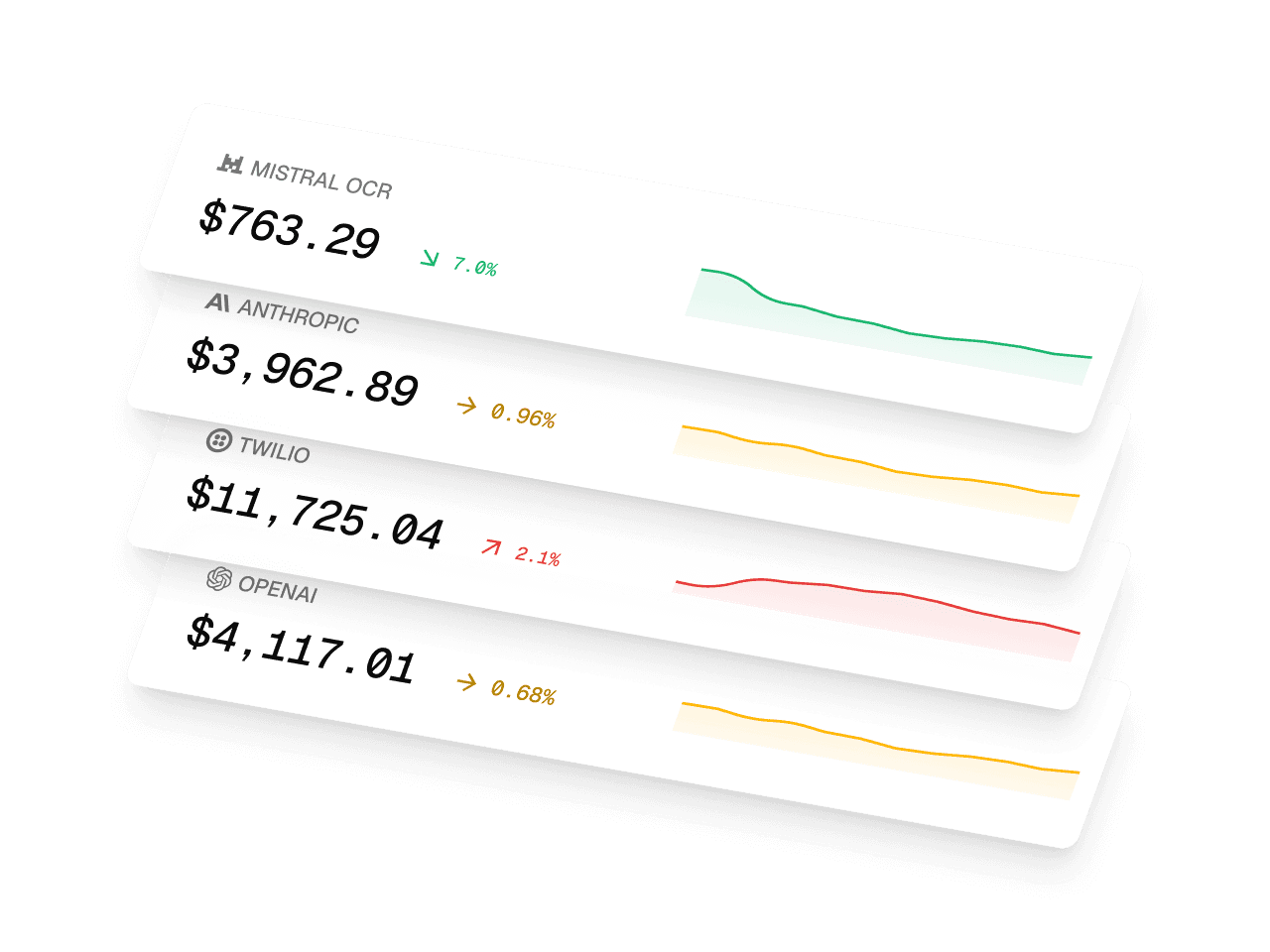
The billing platform built for AI companies. Launch pricing models, track costs, and optimize margins—no engineering lift.
- Track AI costs by model & customer
- Launch usage-based pricing fast
- Know your margin on every deal
- Integrate in minutes