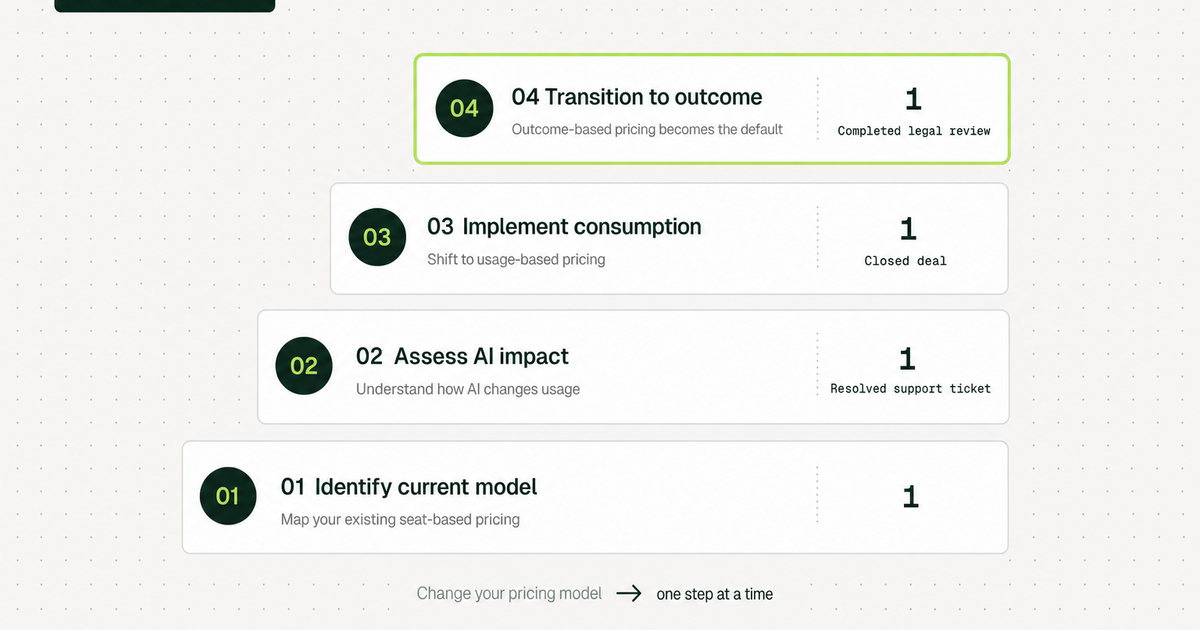
"Should you include your rate card in client contracts?"
We've been hearing this question a lot recently, and it's a good one. As more software companies move toward credit-based pricing, the mechanics of how you structure, present and contract around credits can make or break your commercial flexibility. So let's get into it.
Keep Your Rate Card Separate — But Connected
The short answer to "should your credit rate card be in the contract?" is: no, but it should be referenced.
What we always recommend is maintaining your rate card as a living document, linked to the contract, visible to the client, but explicitly subject to change as your product evolves. Here's why that matters in practice.
Say you have an agent that pulls reports, and you price that at 5 credits. Six months later, you release an upgraded version: it pulls the report, summarises it, and automatically routes the relevant information to the right teams. That's a meaningfully better product. You want to charge 10 credits for it.
If your rate card is embedded in the contract, that conversation becomes a renegotiation. Legal gets involved. Timelines slip. What should have been a moment to celebrate a product improvement turns into a commercial headache.
If your rate card is separate, that's not a contract issue. It's a marketing and growth opportunity. You're not raising prices; you're demonstrating value.
Buyers Don't Want Transparency — They Want Trust
There's a common instinct among vendors to offer maximum transparency on pricing in order to build trust with buyers. We'd push back on that framing.
Buyers aren't looking for transparency. They're looking for vendors they can trust, and those are different things. What a buyer really wants to know is: can this vendor deliver the outputs I need, and can they prove it to me beyond any doubt?
Locking yourself into a rigid pricing structure doesn't make you more trustworthy. It just limits your ability to adapt. And in a space where product capabilities can shift significantly in a matter of weeks, committing contractually to a rate card that may be commercially suboptimal in three months serves nobody, least of all the client relationship you're trying to protect.
Rate Cards vs. Bundling — Don't Conflate Them
This is one of the most important distinctions in credit-based selling, and it's one that often gets muddled in commercial conversations.
A rate card defines what an action or deliverable is worth in credits. It's a product and pricing tool.
Bundling is a sales tool for selling credits at volume. It's how you structure deals.
These are not the same thing, and treating them as interchangeable creates real problems, particularly when dealing with large enterprise accounts.
Enterprise clients will often expect a lower effective rate given their scale. That's fine. But the answer isn't to give them a different rate card. The answer is to adjust the credit allocation. If a client feels that 5 credits for a report pull is too high at their volume, you don't change what the action is worth. You sell them double the credits for the same price. That's a bundling conversation. That's a sales job.
The rate card stays intact. The deal gets done. Your pricing architecture remains consistent.
Credits Are the Ultimate Reflection of Usage vs. Value
Here's the core commercial logic of credit-based pricing, and it's worth stating plainly: credits are a direct, honest mirror of usage and value.
If a customer buys credits and doesn't use them, they'll churn. If they use them but don't see the value, they'll also churn. The model only works, for both sides, if the pricing is fair and the product genuinely delivers.
That's actually a feature, not a bug. It keeps you honest as a vendor. You're not incentivised to inflate your rate card, because an unfair rate card accelerates churn. You're not incentivised to obscure usage, because the model falls apart if customers don't see value. Credits align vendor and customer interests in a way that seat-based pricing simply doesn't.
Credits vs. Seats: Visibility Changes Everything
Speaking of seats, let's talk about why the shift to credits represents a fundamentally different relationship with your customers.
With seat-based pricing, usage is largely opaque. If a senior stakeholder at a client asks "are we actually getting value from this?", the answer involves a Customer Success Manager pulling reports, scheduling a review call, and making a case retrospectively. By the time that conversation happens, the damage may already be done.
With credits, usage is live and visible to anyone in the platform. There's no ambiguity, no waiting for a quarterly review. Credit utilisation is self-evident, which means your CS and revenue teams can act on it in real time, not in retrospect.
This is why credit utilisation should be a core metric for Customer Success and revenue teams alike, tracked across every stage of the customer lifecycle: Land, Expand, and Renew.
- Land: Are they activating? Are credits being used in the first weeks?
- Expand: Is utilisation growing in line with the value they're seeing?
- Renew: Is utilisation high enough that renewal is a straightforward conversation?
Credits don't just tell you whether a customer is paying. They tell you whether a customer is succeeding.
Conclusion: Credits Done Right
Credit-based pricing is one of the most powerful commercial models available to software companies today, but only if you set it up correctly from the start.
Keep your rate card separate from contracts. Build trust through delivery, not pricing transparency. Know the difference between your rate card and your bundling strategy. Price fairly, because the model depends on it. And treat credit utilisation as the real-time pulse of customer health that it is.
Done right, credits aren't just a billing mechanism. They're a growth engine and a retention tool that works in plain sight.
Paid makes it easy to launch and manage credit-based pricing; from configurable bundles and real-time consumption dashboards to automated top-ups and ROI reporting. Talk to us about adding credits to your product →
Stay ahead of AI pricing trends
Get weekly insights on AI monetization, cost optimization, and billing strategies.
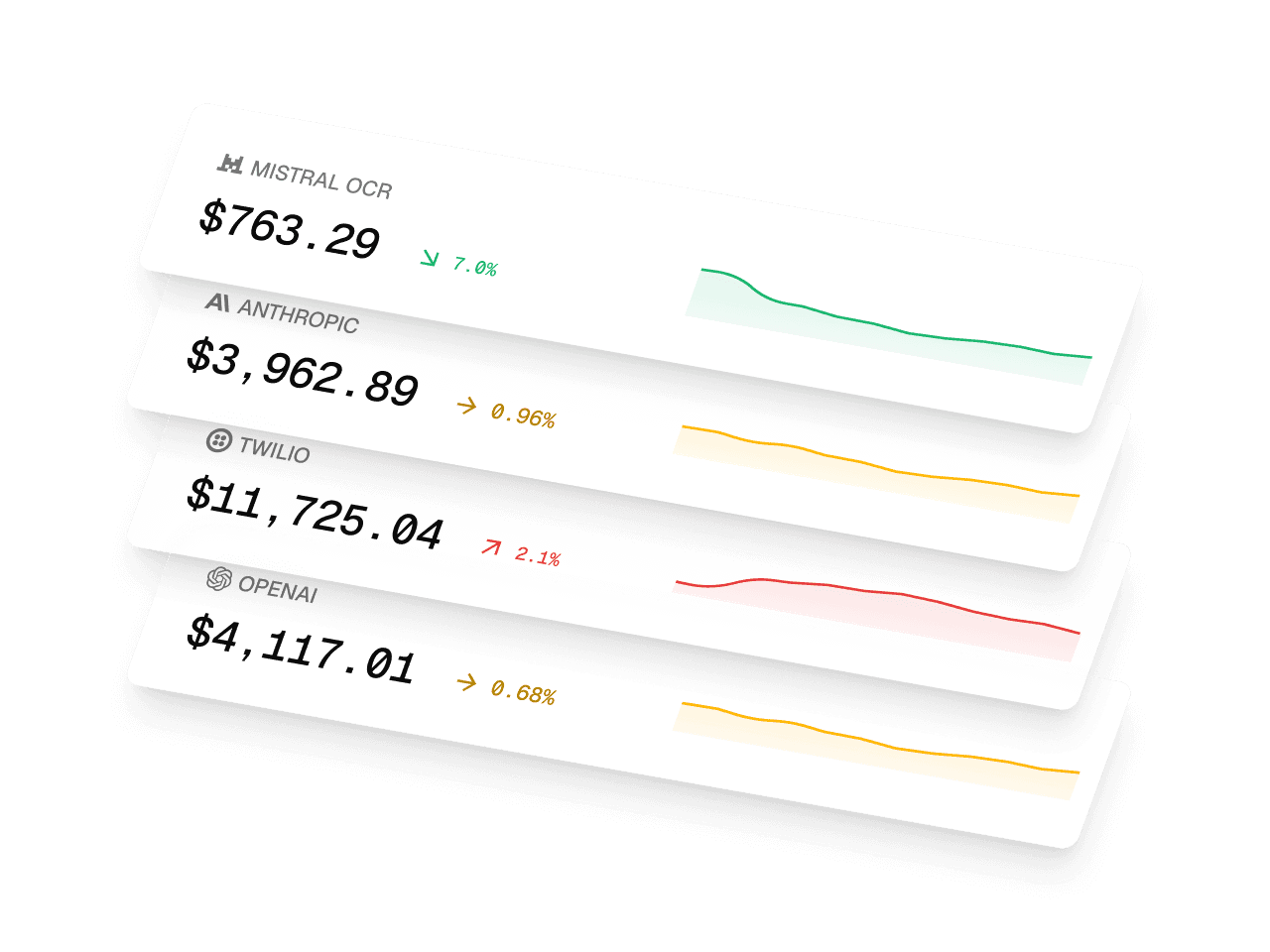
Monetize AI Without the Headache
The billing platform built for AI companies. Launch pricing models, track costs, and optimize margins—no engineering lift.
- Track AI costs by model & customer
- Launch usage-based pricing fast
- Know your margin on every deal
- Integrate in minutes