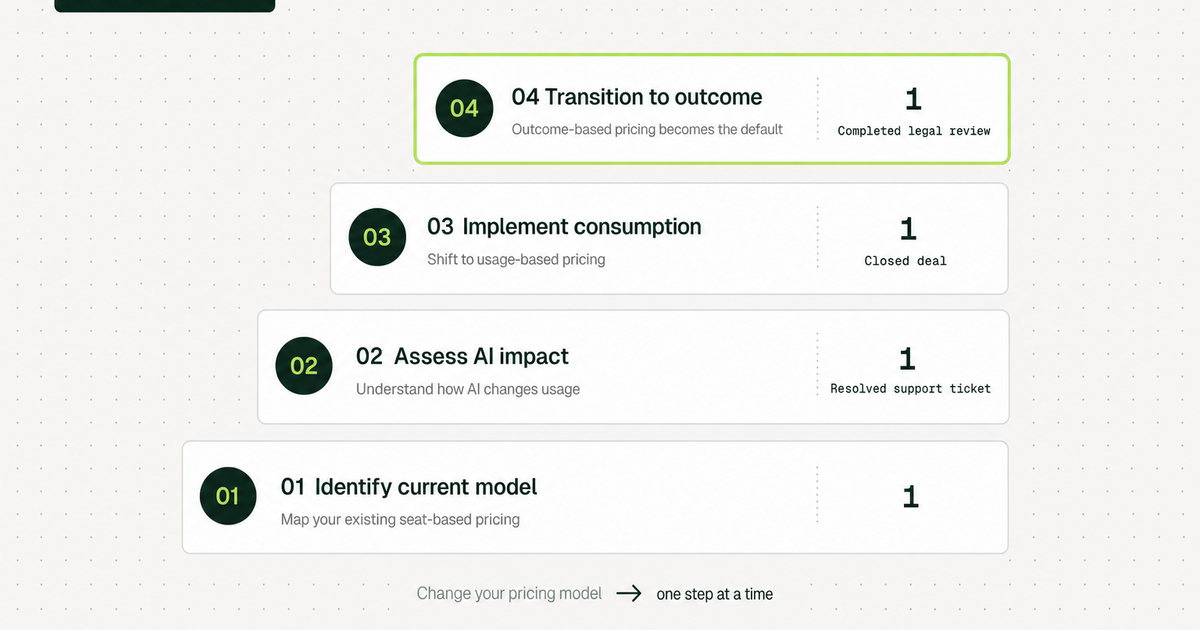
People don’t dislike usage-based pricing. They dislike moments where they open a product, see a number drop, and immediately think, wait… what just happened?
The problem isn’t variability.
It’s being surprised.
The worst moment isn’t usage going up. It’s being asked to explain why it went up and realizing you don’t actually know. That’s when usage stops feeling flexible and starts feeling risky.
→ Predictability is “tell me my bill to the dollar a year in advance.”
→ Transparency is “show me what’s driving it, and let me control it.”
Only one of those works in real systems.
We already accept usage when cause and effect are obvious
You don’t predict your electricity bill a year out.
You just know that guests stayed over, the showers ran longer, and the bill went up. No panic. No spreadsheet. The story makes sense.
AWS works the same way. So do Snowflake, OpenAI, Figma, Clay.
All aggressively usage-based.
What makes them workable isn’t fixed pricing. It’s that when something spikes, you can see what changed, when it changed, and whether it’s expected.
Usage feels fine when cause and effect are obvious.
It only feels scary when it isn’t.
Where credits quietly go wrong
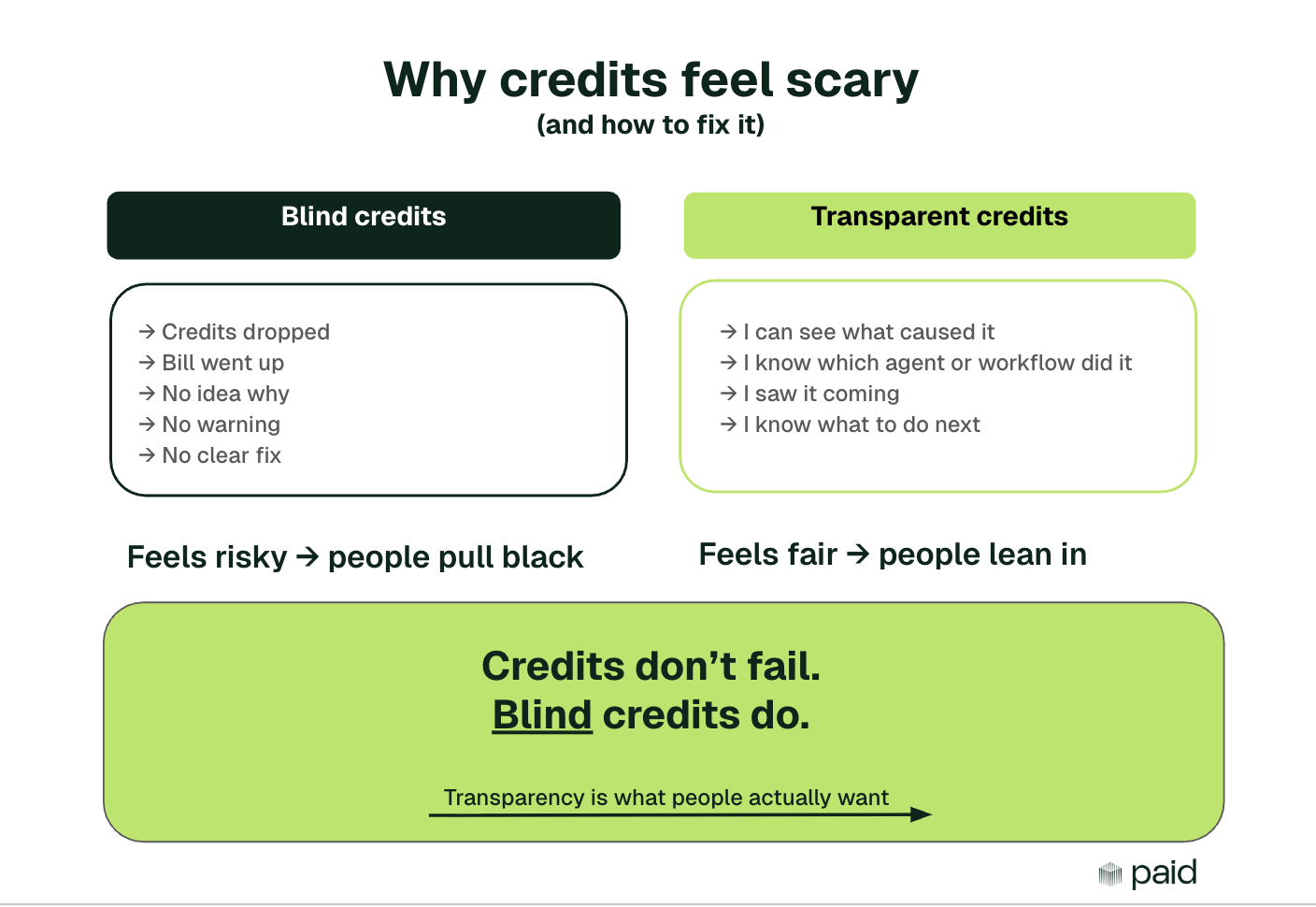
Credits are meant to simplify usage-based pricing. One abstraction instead of tokens, calls, actions, or workflows. At first, they feel clean and easy to sell.
→ Then customers log in.
→ They see a balance.
→ They use the product.
→ The number goes down.
And now they’re guessing.
→ Was that expected?
→ Did someone run the wrong thing?
→ Did an agent behave differently overnight?
When credits hide the story behind usage, every drop feels suspicious. That’s not a pricing problem. It’s anxiety.
Credits don’t fail. Blind credits do.
When credits feel unclear, teams fall into the same two patterns.
Some become overly cautious and adoption stalls.
Others ignore usage until the bill arrives, trust erodes, and pricing gets blamed.
Either way, behavior shifts in the wrong direction.
People stop asking “what value did this create?”
They start asking “how do we burn fewer credits?”
That’s when pricing starts working against growth.
AI removes the option to avoid this
Seats feel comforting. One number. One line item. One less thing to explain.
But AI agents don’t behave politely. They run autonomously. They spike. They don’t create value evenly. Meanwhile, AI and inference costs don’t follow seat counts.
Whether you price by outcomes, actions, workflows, or resources, you’re in a usage economy now.
That economy only works if customers feel informed, in control, and confident as usage grows.
We’re arguing about the wrong thing
The industry keeps debating usage versus seats. Variable versus fixed. Predictable versus unpredictable.
That’s the wrong debate.
People don’t want a perfectly predictable bill.
They want a bill that makes sense.
Usage isn’t the problem.
Not understanding what’s driving it is.
That’s what actually scales.
If you’re building AI agents and thinking about how usage-based pricing and credits fit into that world, we’re working on Paid Credits - our take on using credits as a transparent usage layer that helps customers understand what’s driving usage, see what’s coming next, and stay in control as they scale. Join the waitlist to get early access.
Stay ahead of AI pricing trends
Get weekly insights on AI monetization, cost optimization, and billing strategies.
Monetize AI Without the Headache
The billing platform built for AI companies. Launch pricing models, track costs, and optimize margins—no engineering lift.
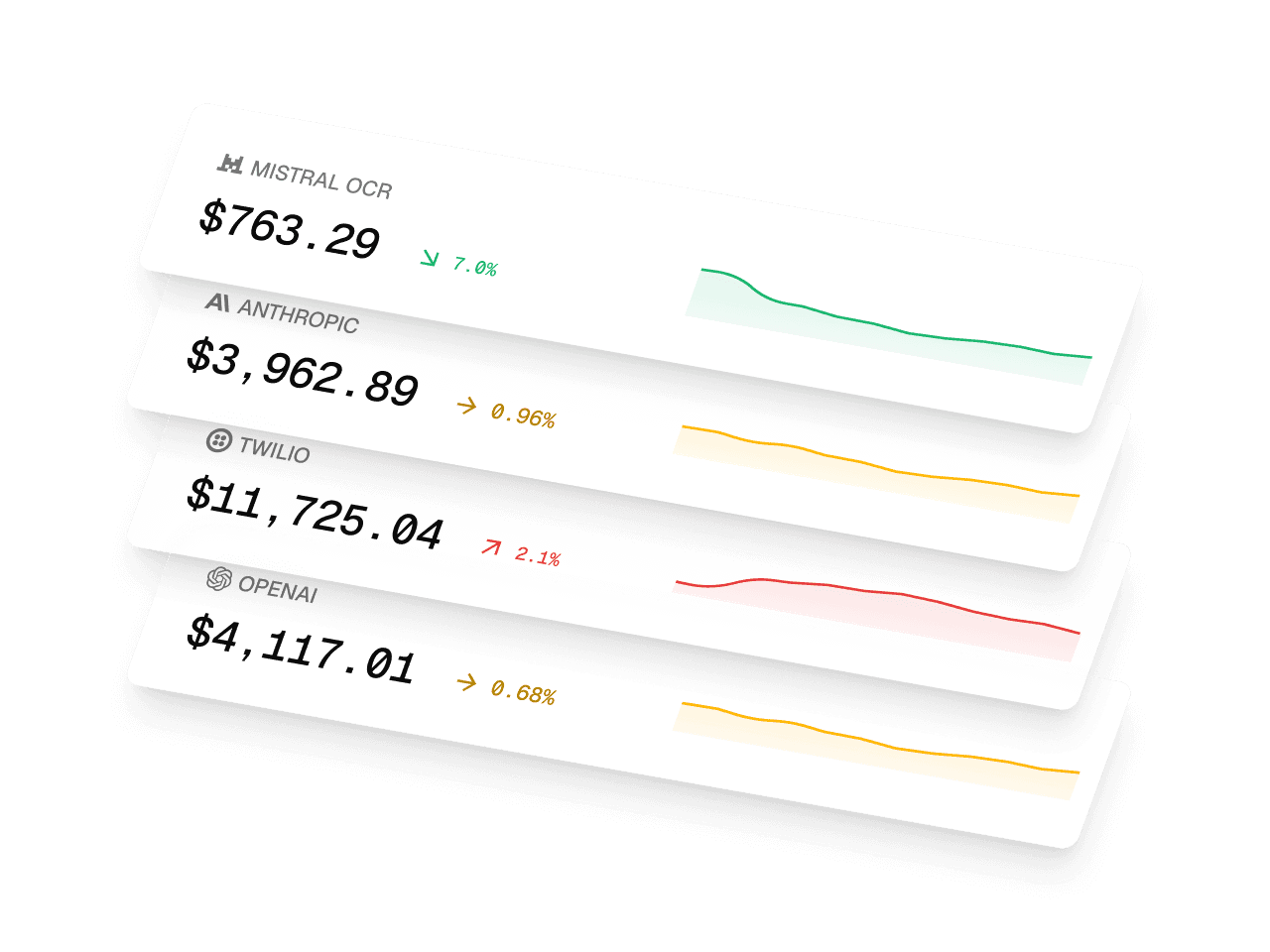
- Track AI costs by model & customer
- Launch usage-based pricing fast
- Know your margin on every deal
- Integrate in minutes