Co-authored by Madhavan Ramanujam, Joshua Bloom & Dimi Hiotis
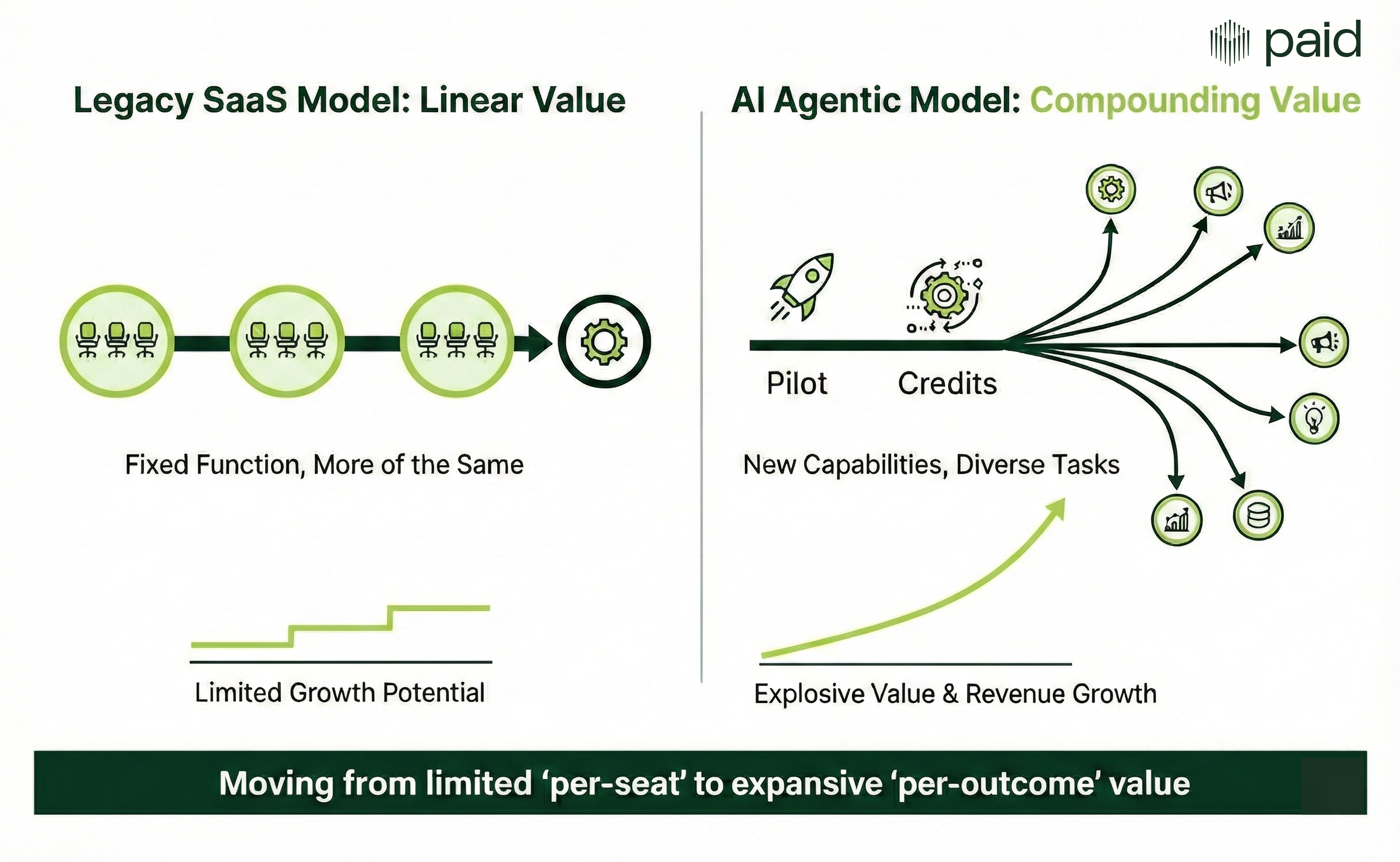
For two decades, the software industry has operated primarily under a single, dominant economic model: the seat-based subscription. This model was built for the SaaS era: a period defined by software as a tool designed to enhance human productivity. Legacy SaaS growth models like Product Led Growth (PLG) and Sales Led Growth (SLG) are inherently flawed for AI because they rely on human interaction - measured in seats - as a proxy for value. In the agentic era, software is no longer defined by worker access; it is increasingly a mechanism for autonomous productivity. When software stops assisting the worker and starts performing the work, the "seat" ceases to be an accurate proxy for value.
The Fundamental Shift: From Software as an engine to Software as a driver
The transition from traditional SaaS to AI-native applications represents a fundamental change in both the value proportion & cost of goods sold. In the legacy SaaS model, value was anchored in the user’s ability to take the wheel and drive the software to produce an output. It was also a world where the marginal cost to the vendor for supplying another seat was near zero.
In the Agentic AI paradigm, the software is an independent driver. Every "inference" or "agentic action" carries a real-time marginal cost in compute and tokens. Simultaneously, the value shifts from "enablement" to "completion". If an AI agent resolves a customer support ticket or refactors code, it is tapping into labor budgets rather than IT software budgets. Labor budgets are traditionally an order of magnitude larger, often 10x larger, because humans represented the predominant driver of real business outcomes.
Failing to recognize this shift leads to a structural misalignment. Founders applying traditional SaaS playbooks, PLG for bottom-up adoption and SLG for top-down selling, often find themselves trapped. They are forced to bundle expensive compute into flat-fee subscriptions, eroding margins while failing to capture the massive "alpha" created by their autonomous agents. To thrive, founders must move toward a value-based contract where the unit of monetization is the work itself.
Credit-Led Growth (CLG): Ensuring a repeatable sales processes
To capture this value, companies must adopt Credit-Led Growth (CLG), a model where the vendor sells a standardized bucket of credits with a simple schedule that assigns a fixed number of credits to every agent AI action or outcome. Each activity draws from the same credit pool, creating a universal mechanism for monetizing autonomous agents and delivering strong sales-market fit without introducing pricing complexity.
CLG solves the "expansion friction" inherent in SaaS. In a seat-based model, monetizing a new use case requires a new procurement cycle. In a credit-led model, the user can draw from their existing package (of credits allocated) for any new AI capability the vendor ships, bypassing renegotiation. This creates a scalable, frictionless sales process where teams purchase buckets of credits and only discuss expansion (more credits) once credits are exhausted.
 Product teams in a CLG world must develop entirely new capabilities centred on engineering for autonomy and attribution. This transformation begins with building agentic workflows where the AI operates independently to complete high-value outcomes rather than merely providing human-centric interfaces. A critical component of this new product motion is the "fair exchange" calibration, requiring an evaluation of agentic outputs to align them with a fair-market price based on the actual work completed. Furthermore, product teams must embed real-time telemetry to track consumption against provisioned credits, specifically focusing on the "Value-to-Burn" ratio. This ensures that every credit consumed is immediately justified by produced value units, such as resolved tickets or completed research briefs, displayed in real-time dashboards.
The sales function must similarly evolve from selling tools to managing a strategic digital workforce. The new sales playbook starts with selling an initial standardized bucket of credits that serves as a universal currency for any AI capability the vendor ships. Sales teams must move away from a "set it and forget it" mentality and proactively keep in touch with customers regarding their credit consumption. By monitoring consumption velocity, sales representatives can turn potential overage conversations into value-discovery sessions where they showcase verifiable ROI, such as the number of automated reports created or hard cost savings. This enables the creation of a "CFO View" dashboard that uses historical data to provide an intelligent forecast of how many credits will be needed upon renegotiation. This data-driven approach turns the consumption model into a predictable growth engine, allowing sales to manage renewals as strategic expansions of the customer's synthetic labor force.
Operationalizing CLG with Paid.ai:
Operationalization requires real-time telemetry of agent tasks to track consumption against provisioned credits. Crucially, the buy-side experience must prioritize transparency to avoid the bill shock often associated with usage-based models. Buyer-side dashboards are required to view produced value units (e.g., tokens consumed, number of accounts researched, resolutions made) and tools to manage, provision and forecast usage of credits. Paid.ai enables this by providing the necessary transparency, provisioning, and forecasting tools for buyers to feel in control. In addition Paid.ai offers the ability to set targeted promotional credits for new AI workflows to spur engagement and adoption.
Case Study: The transition to agentic models is rarely just a technical evolution; it is a fundamental commercial overhaul. We see this paradigm shift most clearly in the transition of legacy sectors, such as the move from traditional DevOps tools to "AgentOps." For one such provider, this evolution required a total departure from seat-based subscriptions toward a model of credit-enabled charges for high-value outcomes. Working alongside this business, Paid.ai helped define the foundational steps for this transition:
- Outcome Calibration: A rigorous evaluation of the new agentic outputs to align them with a fair-market price based on the "work" completed.
- Commercial Re-architecting: Moving beyond simple subscription selling to design an entirely new sales motion where representatives are trained to sell a proposition of labor rather than a suite of features.
- Operational Implementation: Deploying a platform capable of handling the complexity of real-time outcome tracking and credit-based provisioning.
This case study illustrates that realizing the full economic potential of AI requires founders to master both the big-picture strategy of labor replacement and the granular, detail-focused implementation of a modern commercial stack.
Conclusion: Building the Commercial Architecture of the Future
We have moved beyond providing tools for the workforce to providing a workforce that does the work. Monetizing work is not a mere pricing adjustment; it is a transformation of the organization's Commercial Architecture. It requires product engineering to incorporate telemetry, sales/RevOps to build ROI models, and value engineering teams to focus on driving
Stay ahead of AI pricing trends
Get weekly insights on AI monetization, cost optimization, and billing strategies.
Monetize AI Without the Headache
The billing platform built for AI companies. Launch pricing models, track costs, and optimize margins—no engineering lift.
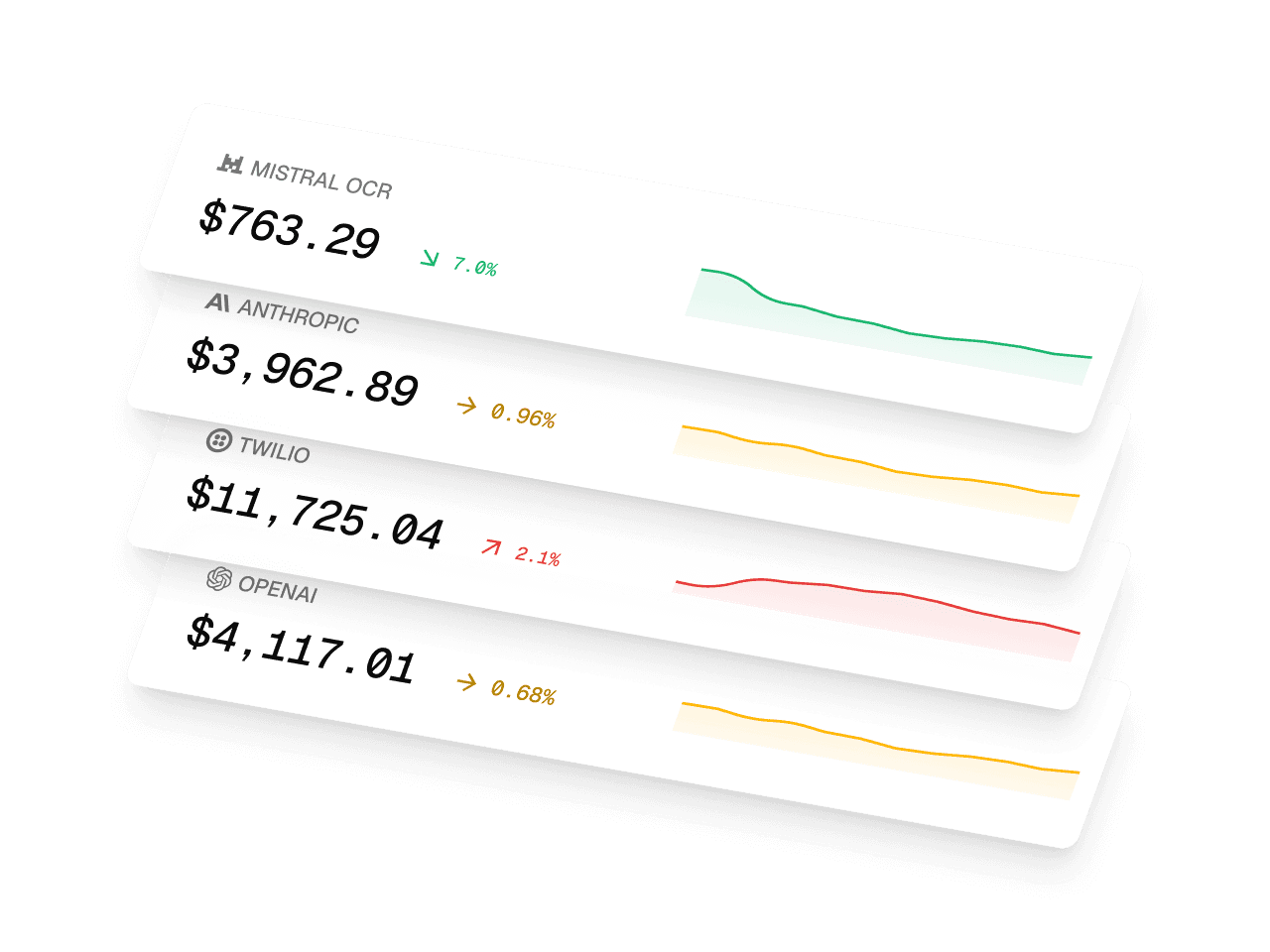
- Track AI costs by model & customer
- Launch usage-based pricing fast
- Know your margin on every deal
- Integrate in minutes